Queer Places:
The Green-Wood Cemetery, 25th St, Brooklyn, NY 11232, United States
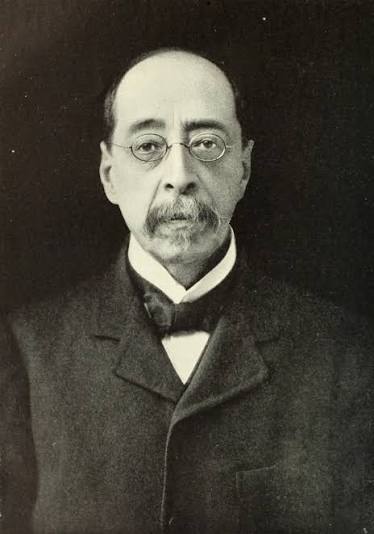 John La Farge (March 31, 1835 – November 14, 1910) was a pivotal figure in 19th-century American art, renowned as a painter, muralist, writer, and a revolutionary designer
of stained glass. A highly intellectual and cosmopolitan artist, his work bridged the gap between European traditions, American innovation, and the aesthetic influences of
Asia.
John La Farge (March 31, 1835 – November 14, 1910) was a pivotal figure in 19th-century American art, renowned as a painter, muralist, writer, and a revolutionary designer
of stained glass. A highly intellectual and cosmopolitan artist, his work bridged the gap between European traditions, American innovation, and the aesthetic influences of
Asia.
Born in New York City on March 31, 1835, to a wealthy family of French émigrés, La Farge received a rigorous, classical education at Mount St. Mary's College in Maryland.
Though he briefly pursued a legal career, his passion for art led him to Paris in 1856, where he studied briefly under the influential French painter Thomas Couture.
Upon returning to the United States, he settled in Newport, Rhode Island, to study with the noted American painter William Morris Hunt.
La Farge is perhaps most famous for his pioneering work in stained glass. In the 1870s, he developed and patented a method for creating opalescent glass, which used
irregular textures and multi-layered, colored glass to create three-dimensional, shimmering effects that were vastly different from traditional stained glass.
His innovations in this medium earned him international acclaim, including the French Legion of Honor.
His career as a muralist gained momentum in 1876 with a major commission to decorate the interior of Trinity Church in Boston, working alongside architect
Henry Handel Richardson. Another of his most famous works is the grand mural, The Ascension (1887), housed in the
Church of the Ascension in New York City.
La Farge was one of the first Western artists to deeply engage with Japanese art. His collection of Japanese prints informed his own work, and his travels to
Japan (1886) and the South Pacific (1890–1891)—often in the company of his friend, the historian Henry Adams—resulted in a prolific
series of watercolors that predate similar exotic subjects by later artists like Paul Gauguin.
He was a founding member of the Society of American Artists, established in 1877 by younger, progressive artists who felt the National Academy of Design was too
conservative. He also became a respected lecturer and writer on aesthetics, publishing works such as An Artist's Letters from Japan (1897) and
Considerations on Painting (1895).
La Farge was an incredibly prolific artist, credited with thousands of drawings and watercolors, hundreds of stained-glass windows, and numerous mural projects.
He was recognized as a central figure in the American Renaissance movement, which emphasized the integration of fine art with architecture and the decorative arts.
By the time of his death in Providence, Rhode Island, on November 14, 1910, he had left an indelible mark on the American aesthetic landscape, blending intellectual depth
with technical mastery.
References:
- https://en.wikipedia.org/wiki/John_La_Farge
- https://www.britannica.com/biography/John-La-Farge
- https://library.bc.edu/lafargeglass/biography
- https://www.fineartphotographyvideoart.com/2021/09/John-LaFarge.html
- https://www.spellmangallery.com/artists/john-la-farge
- https://collection.terraamericanart.org/people/272/john-la-farge
- https://www.fordhamprep.org/alumni/hall-of-honor/inductees/single-post/~board/hall-of-honor/post/john-f-lafarge-jr-class-of-1852
Support this project
This website is a passion project researched, developed, and funded entirely by me. If you find the content valuable and would like to help support the ongoing research and hosting costs, any contribution is deeply appreciated.
Thank you for keeping this independent resource alive!
My books on Amazon: Elisa Rolle's books
BACK TO HOME PAGE